
.png)
.png)
.png)

 Bestseller
Rise Through the Fire
A dark symbol of resilience, rebirth, and strength emerging from chaos, flame, and shadow.
From €59

Image 1 of 5
A solitary penguin journeys across endless snow, capturing resilience, freedom, quiet courage, and nature's breathtaking beauty beneath majestic frozen mountain peaks.
Shipping calculated at checkout. Any tax is shown before you pay.
Selected: Framed Canvas — 70 × 100 cm, Black Frame
Room-fit note
A considered fit for the bedroom
Its vertical composition adds height without taking over the whole wall. Its amber and cream palette gives you a practical starting point for nearby textiles and objects.
A room anchor
Made to hold its own above a sofa, bed, sideboard, or dining bench.
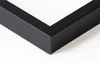
Black · gallery-style floating edge
A crisp floating edge that gives the artwork a clean architectural boundary. Especially strong with graphic, monochrome, contemporary, and high-contrast pieces.
Finish previews are representative. Screen colour, lighting, and natural grain can vary slightly.
Made to order
Estimated production time is 5 business days. Delivery is typically 8–17 business days, including production.
The feeling in the room
A solitary penguin journeys across endless snow, capturing resilience, freedom, quiet courage, and nature's breathtaking beauty beneath majestic frozen mountain peaks.
n 1913, Swiss photographer Frédéric Boissonnas travelled through the southern Balkans with Swiss art historian Daniel Baud-Bovy. Their journey took them through Epirus, Albania and other parts of the region during a period of extraordinary political and social change. Boissonnas used his camera not only to document landscapes and architecture, but also to preserve glimpses of ordinary people whose everyday lives rarely entered formal historical records.
Among those surviving photographs is a haunting image catalogued simply as “Woman in Delvina, Albania.” It was taken in 1913 and preserved as part of Boissonnas’s photographic legacy.
There is no grand palace, famous politician or battlefield in the scene.
Instead, there is one woman.
Wrapped in layers of dark clothing, she stands on rough ground carrying her belongings and a large traditional object across her back. A heavy patterned bag hangs in front of her body. Her head is covered, and one hand rises toward her face, giving the scene an extraordinary sense of fatigue, thought and quiet emotion.
We do not know her name.
Boissonnas did not leave us a biography explaining who she was, where she was travelling or what had happened moments before the photograph was taken. That absence is important. She survives in history not as a celebrated individual, but as one of countless ordinary women whose labour sustained families and communities.
The year 1913 gives the image additional weight.
Boissonnas and Baud-Bovy were travelling through the region during the Balkan Wars, and their photographs became visual records of communities living through a period in which borders, governments and political identities were rapidly changing. A surviving collection of Boissonnas photographs from the journey includes views of Delvinë as well as its inhabitants.
Yet the woman herself does not appear concerned with politics.
Her world seems much more immediate.
There is the weight she carries.
The road beneath her feet.
The clothing protecting her from the elements.
And whatever destination still waits ahead.
That is what makes the image so emotionally powerful.
Her bent posture suggests hardship, but she remains standing. The objects she carries may look heavy, yet they also represent responsibility—perhaps possessions, tools of daily life or things necessary for the household she supports.
The drawing you have transforms Boissonnas’s documentary image into something almost monumental. By removing colour and emphasizing the lines of the woman’s clothing, hands, shoes and belongings, the scene begins to resemble an engraving from another century.
Every wrinkle becomes part of the story.
Every fold of fabric suggests movement and years of use.
The rough landscape around her reinforces the impression that life was demanding, but the woman herself does not appear defeated. She continues forward.
For an art collection, the work can therefore represent much more than a historical portrait of Delvinë.
It can represent the strength of Albanian women, the invisible labour of previous generations and the endurance required to carry a family through uncertain times.
More than a century later, we may never know the woman’s name.
But Boissonnas’s photograph ensured that, for one moment in Delvinë in 1913, she was seen.
And that simple act of preservation turns an anonymous traveller into a lasting symbol of dignity, resilience and memory.
Each artwork is prepared after you order in the format, size, and frame you select. Final material and finish details are confirmed against the chosen product configuration before production.
Canvas
A textured canvas presentation supplied ready to display
Framed Canvas
Canvas with a floating frame. Available finishes, materials, and profile widths are shown with each frame choice
Prepared with Care
Produced to order in the format, size, and frame shown in your order summary
If an order arrives damaged, contact us within 48 hours with photographs so we can review it promptly.
Tracking information is sent by email when the finished artwork is dispatched.
Ask about a specific dimension and we will confirm feasibility and provide a quote.
BestsellerA dark symbol of resilience, rebirth, and strength emerging from chaos, flame, and shadow.
.png)
A graceful portrait of tradition, identity, and quiet strength, revealed through intricate embroidery and mystery.
.png)
A solitary rose reaches toward an open world, where passion meets freedom and possibility.

A quiet celebration of aged wine, fading leaves, and the timeless beauty found in moments meant to be savored slowly.
Framed Canvas — 70 × 100 cm, Black Frame
€240