
-1.png)
-2.png)
-1.png)
.png)
-1.png)
.png)
Veiled in Heritage
A graceful portrait of tradition, identity, and quiet strength, revealed through intricate embroidery and mystery.
From €59

Image 1 of 6
Minimal background keeps the focus intimate and deliberate. A striking focal piece that lends thoughtful presence to a living room, study, or gallery wall.
Shipping calculated at checkout. Any tax is shown before you pay.
Selected: Framed Canvas — 70 × 100 cm, Black Frame
Room-fit note
A considered fit for the bedroom
Its vertical composition adds height without taking over the whole wall. Its gold and cream palette gives you a practical starting point for nearby textiles and objects.
A room anchor
Made to hold its own above a sofa, bed, sideboard, or dining bench.
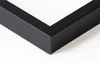
Black · gallery-style floating edge
A crisp floating edge that gives the artwork a clean architectural boundary. Especially strong with graphic, monochrome, contemporary, and high-contrast pieces.
Finish previews are representative. Screen colour, lighting, and natural grain can vary slightly.
Made to order
Estimated production time is 5 business days. Delivery is typically 8–17 business days, including production.
The feeling in the room
Minimal background keeps the focus intimate and deliberate. A striking focal piece that lends thoughtful presence to a living room, study, or gallery wall.
Although the painting is called The Third of May 1808, Francisco Goya actually painted it in 1814, six years after the events it represents. Its story begins with Napoleon Bonaparte’s intervention in Spain and the French occupation of Madrid.
On 2 May 1808, people in Madrid rose against French forces after members of the Spanish royal family were being removed from the city. Fighting erupted in the streets between local citizens and Napoleon’s troops. The uprising was violently suppressed. Goya later commemorated the street fighting in a companion painting, The Second of May 1808.
The retaliation came almost immediately.
During the night of 2 May and into the early hours of 3 May 1808, French forces rounded up Spaniards believed to have participated in the rebellion. Many were taken outside Madrid and executed by firing squads. Historical reports indicate that the victims included ordinary labourers, artisans, policemen and other civilians rather than celebrated military heroes.
Goya chose this moment—not the excitement of battle, but the terrifying moment immediately before death.
On the right side of the painting, the French soldiers stand tightly together with their backs toward us. Their faces cannot be seen. Their bodies, uniforms and rifles form an almost mechanical wall. They appear less like individual men and more like an anonymous machine built for killing.
Facing them is a group of Spanish prisoners.
At the centre, a man wearing a brilliant white shirt and yellow trousers kneels with his arms stretched wide. The lantern on the ground throws intense light across his body, making him the brightest part of the entire composition.
His pose immediately recalls the crucifixion of Christ. His arms form a cross-like shape, and a mark visible on his hand has often been interpreted as resembling Christ’s wounds. Goya, however, does not portray him as a distant religious figure. He looks like an ordinary man experiencing very real terror.
His expression is one of the most powerful elements of the painting.
His eyes are wide open. He looks directly toward the rifles pointed at him. He understands exactly what is about to happen.
Around him, other prisoners respond differently. One covers his face with his hands. Another bows his head. A monk kneels in prayer. Behind them, more condemned men wait for their turn.
In front of the central figure lie men who have already been executed. Their bodies are piled on the ground, and blood spreads beside them.
Goya therefore presents three moments of death simultaneously: those already killed, the man about to die, and the prisoners waiting behind him.
This structure makes the painting feel almost like time moving from one side of the canvas to the other.
The lantern is especially important. Normally, light in traditional religious painting might represent divine presence or salvation. Here, the lantern performs a far more disturbing function: it allows the soldiers to see the people they are about to kill.
The same light that makes the victim appear almost sacred also assists the execution.
Behind everything is darkness.
Madrid can barely be seen in the distance, while the executions take place against a barren hillside. Civilization appears far away. There are no heroic generals, grand monuments or glorious military banners. Instead, Goya concentrates completely on the victims and the violence being done to them.
This was highly unusual for historical painting at the time.
Traditional battle paintings often celebrated victories, commanders and heroic sacrifice. Goya did almost the opposite. His French soldiers have no individuality, and the Spanish prisoners are frightened ordinary people. War is presented without glory.
There is another important historical detail: Goya probably did not personally witness this exact execution scene. The composition is a dramatic reconstruction rather than a documentary record. Some details were deliberately altered to strengthen its emotional impact.
By 1814, Napoleon’s forces had been driven from Spain and Ferdinand VII had returned. In February of that year, Goya wrote to the Spanish Regency expressing his desire to use his brush to commemorate the most important and heroic episodes of the Spanish uprising against Napoleon. His proposal was accepted, and he produced The Second of May 1808 and The Third of May 1808.
Yet The Third of May is much more than a patriotic celebration.
There is very little triumph in it.
Instead, Goya created one of history’s most direct images of what happens when armed power is turned against defenseless people. The executioners remain anonymous while the victims retain their fear, individuality and humanity.
That reversal is one reason the painting became so influential.
Later artists repeatedly returned to its composition when depicting political violence and execution. Its influence can be seen in works such as Édouard Manet’s paintings of the execution of Emperor Maximilian and, more indirectly, Pablo Picasso’s Massacre in Korea.
Today, The Third of May 1808 remains in the Museo del Prado in Madrid, where it is preserved alongside its companion painting.
More than two centuries after the events it represents, the painting remains powerful because Goya did not make it only about Spain or Napoleon.
He made it about something universal.
On one side stands organized violence: uniforms, rifles, obedience and anonymity.
On the other stands a frightened human being with his arms open, fully illuminated, with nowhere left to escape.
That contrast transformed a specific execution in Madrid into one of the most enduring artistic statements against the brutality of war.
Each artwork is prepared after you order in the format, size, and frame you select. Final material and finish details are confirmed against the chosen product configuration before production.
Canvas
A textured canvas presentation supplied ready to display
Framed Canvas
Canvas with a floating frame. Available finishes, materials, and profile widths are shown with each frame choice
Prepared with Care
Produced to order in the format, size, and frame shown in your order summary
If an order arrives damaged, contact us within 48 hours with photographs so we can review it promptly.
Tracking information is sent by email when the finished artwork is dispatched.
Ask about a specific dimension and we will confirm feasibility and provide a quote.
A graceful portrait of tradition, identity, and quiet strength, revealed through intricate embroidery and mystery.
.png)
Where wild instinct meets mountain silence beneath the gentle glow of an untouched horizon.

A luminous portrait of Earth, reminding us how extraordinary our small world is within the endless universe.

A white stallion runs through a crimson world, surrounded by ravens in a powerful vision of freedom and strength.
Framed Canvas — 70 × 100 cm, Black Frame
€240