
.png)
.png)
.png)
.png)
.png)
 Bestseller
Rise Through the Fire
A dark symbol of resilience, rebirth, and strength emerging from chaos, flame, and shadow.
From €59

Image 1 of 6
Turner’s The Fighting Temeraire tells the story of a real British warship reaching the end of its life.
Shipping calculated at checkout. Any tax is shown before you pay.
Selected: Framed Canvas — 70 × 100 cm, Black Frame
Room-fit note
A considered fit for the bedroom
Its vertical composition adds height without taking over the whole wall. Its amber and cream palette gives you a practical starting point for nearby textiles and objects.
A room anchor
Made to hold its own above a sofa, bed, sideboard, or dining bench.
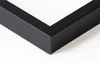
Black · gallery-style floating edge
A crisp floating edge that gives the artwork a clean architectural boundary. Especially strong with graphic, monochrome, contemporary, and high-contrast pieces.
Finish previews are representative. Screen colour, lighting, and natural grain can vary slightly.
Made to order
Estimated production time is 5 business days. Delivery is typically 8–17 business days, including production.
The feeling in the room
Turner’s The Fighting Temeraire tells the story of a real British warship reaching the end of its life.
Temeraire was launched in 1798 as a 98-gun ship of the line. Its most famous moment came during the Battle of Trafalgar on 21 October 1805, when it fought alongside Admiral Horatio Nelson’s HMS Victory. Under Captain Eliab Harvey, the Temeraire helped defend Nelson’s flagship and became closely associated with Britain’s victory over the combined French and Spanish fleets.
But by the 1830s, the great wooden warship belonged to another age.
After years of service, the Temeraire was eventually used mainly as a supply ship at Sheerness. By 1838, it was around forty years old, deteriorating and no longer required by the Royal Navy. The Admiralty sold it, largely for the value of its timber, and it was taken from Sheerness along the River Thames to a shipbreaking yard at Rotherhithe in south-east London.
This final journey became the subject of Turner’s painting.
In the picture, the old warship appears enormous, pale and almost ghostlike. Its masts rise delicately into the sky while a small, dark steam tug pulls it forward.
The contrast is intentional.
The Temeraire represents the heroic world of wooden sailing ships, while the steam tug represents the new industrial age. The old vessel had once moved through the sea under enormous sails and carried hundreds of sailors into battle. Now it can no longer move by its own power.
A small mechanical vessel has to drag it toward destruction.
Turner exaggerates this contrast by painting the Temeraire in luminous whites and golds while making the steam tug dark, compact and smoky. The tug’s chimney releases a dirty cloud into the atmosphere, while the warship seems almost to dissolve into the evening light.
The dramatic sunset is one of the most important elements of the composition.
The sun is literally setting, but it can also be understood as the end of an era. Britain’s great age of wooden sailing warships was fading as steam power and industrial technology transformed naval travel.
The old ship and the dying sunlight tell the same story:
something magnificent is coming to an end.
Turner was not creating a completely accurate historical record.
In reality, many parts of the Temeraire, including its tall masts, had already been removed before its final journey. Two steam tugs were actually involved in towing it along the Thames, whereas Turner concentrates the drama around a single dominant tug. He also changed the appearance of the old ship, painting it in unusually pale, luminous colours.
These changes were deliberate.
Turner wanted viewers to remember the ship as a national hero rather than simply see a decaying wooden vessel being transported for scrap.
It is also uncertain whether Turner personally witnessed the journey. The National Gallery notes that the famous story of him seeing the ship being towed is probably unreliable. He may instead have reconstructed the scene from reports and his own imagination.
When Turner exhibited the painting at the Royal Academy in 1839, he accompanied it with two lines:
“The flag which braved the battle and the breeze, No longer owns her.”
The words emphasized the loss of the ship’s former identity. Once a celebrated fighting vessel flying the British flag, the Temeraire was now privately owned and travelling toward dismantling.
Contemporary audiences responded strongly to the painting.
Critics saw more than a picture of a ship. They saw the passing of history. Writer William Makepeace Thackeray praised the work enthusiastically and understood the small steam tug and glowing old warship as symbols of an older heroic Britain being replaced by a new mechanical age.
Turner himself valued the painting enormously.
He kept it rather than selling it permanently, and it eventually entered the National Gallery through the Turner Bequest in 1856. Today it remains one of his best-known works.
The emotional power of The Fighting Temeraire comes from the fact that there is no battle taking place.
The ship’s greatest victories are already behind it.
Instead, Turner shows the moment after glory.
The old vessel moves slowly toward its final destination while the modern tug powers confidently ahead. Behind them, the sun sinks toward the horizon.
It is therefore not simply a maritime painting.
It is a painting about age, memory, technological change and the inevitable passing of time.
The Temeraire once helped shape history.
Now, beneath Turner’s glowing sunset, it makes one final journey into it.
Each artwork is prepared after you order in the format, size, and frame you select. Final material and finish details are confirmed against the chosen product configuration before production.
Canvas
A textured canvas presentation supplied ready to display
Framed Canvas
Canvas with a floating frame. Available finishes, materials, and profile widths are shown with each frame choice
Prepared with Care
Produced to order in the format, size, and frame shown in your order summary
If an order arrives damaged, contact us within 48 hours with photographs so we can review it promptly.
Tracking information is sent by email when the finished artwork is dispatched.
Ask about a specific dimension and we will confirm feasibility and provide a quote.
BestsellerA dark symbol of resilience, rebirth, and strength emerging from chaos, flame, and shadow.
.png)
A graceful portrait of tradition, identity, and quiet strength, revealed through intricate embroidery and mystery.
.png)
A solitary rose reaches toward an open world, where passion meets freedom and possibility.

A quiet celebration of aged wine, fading leaves, and the timeless beauty found in moments meant to be savored slowly.
Framed Canvas — 70 × 100 cm, Black Frame
€240