

 Bestseller
We Brought the Peacock Home
Belonging should not make sense
From €59

Image 1 of 5
In a faded green room, a masked gentleman shares a quiet dance with an enormous black cat. Strange, elegant and unexpectedly tender, The Etiquette of Monsters is a surreal statement piece about companionship, identity and the people — or creatures — who make us feel understood.
Shipping calculated at checkout. Any tax is shown before you pay.
Selected: Framed Canvas — 70 × 100 cm, Black Frame
Black Friday Flash Sale
Your next favourite artwork, now 20% off with complimentary shipping on Framed Canvas-only orders.
Seasonal offer ends 31 December 2026.
Customer favourite. This artwork is currently curated in Pigmentia's bestseller edit.
Room-fit note
A considered fit for the office
Its wide composition creates a natural anchor above a sofa, bed, or console. Its green palette gives you a practical starting point for nearby textiles and objects.
A room anchor
Made to hold its own above a sofa, bed, sideboard, or dining bench.
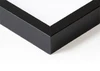
Black · gallery-style floating edge
A crisp floating edge that gives the artwork a clean architectural boundary. Especially strong with graphic, monochrome, contemporary, and high-contrast pieces.
Finish previews are representative. Screen colour, lighting, and natural grain can vary slightly.
Made just for you
Your artwork is prepared after you order, securely packaged, and sent with tracking.
Made to order
About 5 production days
8–17 days total
Estimates vary by destination, customs, and carrier availability.
The feeling in the room
In a faded green room, a masked gentleman shares a quiet dance with an enormous black cat. Strange, elegant and unexpectedly tender, The Etiquette of Monsters is a surreal statement piece about companionship, identity and the people — or creatures — who make us feel understood.
They had both been called strange before. The gentleman because he never removed his mask. The cat because cats generally aren't six feet tall. Neither considered this particularly important. One evening, the cat offered a paw. The gentleman accepted. And beneath the old chandeliers, while the rest of the house slept, two monsters demonstrated impeccable manners.
They danced until the music stopped. Neither ever asked who had started it.
The room had rules for everything.
How to enter.
How to dress.
How to sit.
How to speak.
There were rules about dinner, rules about guests, rules about which fork belonged beside which plate.
But nobody had written a rule for what to do when a six-foot black cat asked you to dance.
So the gentleman did the only reasonable thing.
He accepted.
The cat approached without ceremony, rose onto two legs and offered one paw.
The gentleman adjusted his jacket.
One hand met one paw.
And somewhere inside the old house, music began.
Neither asked where it came from.
They already knew better than to ruin a perfectly good evening with unnecessary questions.
LONG STORY:
There is something wonderfully wrong about the room. The walls are faded green, their surface marked by age and memory. Antique lights hang overhead. An old chair waits silently in the corner. The open doorway suggests another world just beyond the room. And in the centre of it all, two unlikely companions dance.
One is a formally dressed gentleman whose face disappears behind a deep red horned mask.
The other is an enormous black cat standing almost as tall as he is.
The scene should feel threatening.
Instead, it feels strangely polite.
That contradiction gives The Etiquette of Monsters its personality.
The gentleman appears controlled and composed, dressed for a world of traditions, expectations and social rules. The cat belongs to something less predictable — instinctive, mysterious and impossible to explain. Yet when they meet, neither seems out of place. There is no fear. No confrontation.
No need for either of them to become something else. They simply dance. The artwork turns strangeness into companionship and darkness into something unexpectedly warm. It suggests that perhaps the most unusual parts of ourselves are not meant to be hidden. Perhaps they are only waiting to meet the right company.
The aged interior gives the piece the atmosphere of a forgotten European home, while the surreal central figures pull it firmly into contemporary storytelling. Muted mint green, charcoal black, antique brown and the restrained red of the mask create a sophisticated palette that works beautifully in eclectic, vintage, dark-academia and contemporary interiors. The result is a statement piece that does more than fill an empty wall.
It starts conversations.
Some viewers will see friendship.
Some will see a man dancing with his own shadow.
Others may see the cat as instinct, imagination, darkness or simply the one companion who never asked the gentleman to remove his mask.
There is no single correct interpretation.
And monsters, after all, have always been more interesting when nobody explains them completely.
The Meaning Behind the Artwork:
The Etiquette of Monsters plays with the contrast between what society considers proper and what it considers strange.
The gentleman represents order.
The suit, posture and formal environment suggest restraint, expectation and social convention.
The mask complicates that image.
It hides identity while simultaneously revealing something unusual beneath the polished exterior.
The black cat represents the opposite force.
Instinct.
Mystery.
Independence.
The part of us that does not care very much about behaving correctly.
Their dance brings those two worlds together.
Rather than fighting the strange parts of himself, the gentleman learns to move with them.
That is why the scene can feel humorous at first and surprisingly emotional the longer you look at it.
= A Different Interpretation =
Maybe the cat isn't a monster at all. Maybe the gentleman is. Perhaps that is why they understand each other so well.
Interior Styling - The Etiquette of Monsters works particularly well in:
- Living rooms - Reading rooms - Home offices - Boutique hotels - Cocktail lounges - Restaurants - Creative studios - Hallways and entrance spaces - Dark-academia interiors - Eclectic and vintage-inspired interiors
The muted palette allows the artwork to work with walnut wood, black furniture, brass details, burgundy accents, cream upholstery and aged green tones.
Each artwork is prepared after you order in the format, size, and frame you select. Final material and finish details are confirmed against the chosen product configuration before production.
Canvas
A textured canvas presentation supplied ready to display
Framed Canvas
Canvas with a floating frame. Available finishes, materials, and profile widths are shown with each frame choice
Prepared with Care
Produced to order in the format, size, and frame shown in your order summary
If an order arrives damaged, contact us within 48 hours with photographs so we can review it promptly.
Tracking information is sent by email when the finished artwork is dispatched.
Ask about a specific dimension and we will confirm feasibility and provide a quote.
BestsellerBelonging should not make sense
 Bestseller
Even monsters have manners.
 Bestseller
 Bestseller
The gentleman took slightly longer.
Framed Canvas — 70 × 100 cm, Black Frame
€240€192