
.png)
.png)
-1.png)

 Bestseller
Rise Through the Fire
A dark symbol of resilience, rebirth, and strength emerging from chaos, flame, and shadow.
From €59
-1.png)
Image 1 of 5
In Eden, Adam and Eve stand among creation, moments before innocence gives way to the forbidden choice.
Shipping calculated at checkout. Any tax is shown before you pay.
Selected: Framed Canvas — 70 × 100 cm, Black Frame
Room-fit note
A considered fit for the bedroom
Its vertical composition adds height without taking over the whole wall. Its amber and cream palette gives you a practical starting point for nearby textiles and objects.
A room anchor
Made to hold its own above a sofa, bed, sideboard, or dining bench.
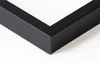
Black · gallery-style floating edge
A crisp floating edge that gives the artwork a clean architectural boundary. Especially strong with graphic, monochrome, contemporary, and high-contrast pieces.
Finish previews are representative. Screen colour, lighting, and natural grain can vary slightly.
Made to order
Estimated production time is 5 business days. Delivery is typically 8–17 business days, including production.
The feeling in the room
In Eden, Adam and Eve stand among creation, moments before innocence gives way to the forbidden choice.
The Vatican Museums describe this enormous canvas as the climax of Wenzel Peter’s career. Peter specialized in animal painting, and this work contains more than 200 animals from around the world, depicted with unusually detailed and almost scientific observation.
Adam and Eve in the Garden of Eden is far more than a biblical scene. Wenzel Peter transformed the story of humanity’s first paradise into an enormous celebration of the natural world, filling the landscape with hundreds of animals living together in extraordinary peace.
At the center of the painting stand Adam and Eve beneath the trees of Eden. Yet they are deliberately small compared with the vast world surrounding them. Horses, lions, tigers, camels, monkeys, sheep, cattle, birds, reptiles and countless other creatures occupy almost every part of the composition. Predators rest beside animals that would normally be their prey. Birds fill the branches and sky, while creatures gather around the water and across the open landscape. The Vatican Museums note that Peter included more than two hundred animals and portrayed them with remarkable anatomical knowledge and naturalism.
This peaceful coexistence reflects the biblical idea of creation before sin entered the world.
According to the Book of Genesis, God created the heavens and the earth and filled the world with plants, animals and living creatures. He then created Adam, the first man, and placed him in the Garden of Eden. Adam was given the responsibility of caring for the garden and naming the animals.
God told Adam that he could eat from the trees of the garden with one exception: he must not eat from the Tree of the Knowledge of Good and Evil.
God later created Eve to be Adam's companion.
For a time, Adam and Eve lived innocently in Eden. They knew neither shame nor fear. Nature existed in perfect balance around them, which is the world Peter presents so richly in this painting.
But within the garden was the serpent.
Genesis describes the serpent as cunning. It approached Eve and questioned God's command concerning the forbidden tree. The serpent persuaded her that eating the fruit would not bring immediate death but would instead open her eyes and give her knowledge of good and evil.
Eve looked at the fruit and desired its promised wisdom.
She took it and ate.
She then gave some to Adam, and he ate as well.
Their world changed instantly.
They became aware of their nakedness and felt shame for the first time. They covered themselves and hid among the trees when they heard God approaching.
God called to Adam and asked where he was.
Adam admitted that he had hidden because he was afraid. When questioned, Adam blamed Eve, while Eve explained that the serpent had deceived her.
Their act of disobedience became known in Christian tradition as the Fall of Man.
God pronounced consequences upon the serpent, Eve and Adam. Human existence would now include suffering, labor, conflict and death. Adam and Eve could no longer remain within the untouched paradise of Eden.
They were expelled from the garden, and cherubim were placed at its entrance to guard the way to the Tree of Life.
What Wenzel Peter Shows
Peter's painting is particularly powerful because the tragedy has not yet overwhelmed the landscape.
Eden still appears magnificent.
The animals remain peaceful. The water is calm. Vegetation grows everywhere. The distant mountains disappear into a luminous horizon. Every corner seems alive.
At first glance, Adam and Eve can almost be missed because Peter makes the animal kingdom so dominant. This was intentional. Peter was famous primarily as an animal painter, and the Garden of Eden gave him the perfect subject through which he could bring an enormous variety of species together within a single believable landscape.
The result is almost an eighteenth- and nineteenth-century encyclopedia of nature disguised as a biblical painting.
Peter carefully observed animal anatomy, posture and movement. Some creatures stand quietly, others rest, feed, fly or interact. According to the Vatican Museums, his ability to reproduce such varied species with both artistic skill and detailed knowledge made this painting the highest demonstration of his talent.
There is also an important symbolic contrast.
The animals represent a creation that is still innocent and harmonious. Adam and Eve, however, stand close to the decision that will end that perfect state.
The viewer therefore sees paradise while already knowing that paradise will soon be lost.
This gives the painting a strange emotional quality. It is beautiful, peaceful and abundant, but there is also tension hidden beneath the beauty. The serpent and the forbidden tree introduce the first sign that this seemingly perfect world is about to change forever.
The Painting's Later History
Wenzel Peter spent much of his career in Rome and became particularly admired for his extraordinary ability to paint animals.
In 1831, shortly after Peter's death, Pope Gregory XVI purchased twenty works by the artist to decorate the Room of the Consistory in the Papal State Apartment. The Vatican Museums identify Adam and Eve in the Garden of Eden as the masterpiece and culmination of his career.
Today, the painting belongs to the Pinacoteca Vaticana in the Vatican Museums.
What makes the work exceptional is not simply the story of Adam and Eve. It is Peter's attempt to visualize an entire world before disorder existed—a world in which humans, predators, prey, birds and every imaginable creature share the same landscape without fear.
The painting therefore represents two things at once: the beauty of creation and the fragile moment before that perfection is lost.
Each artwork is prepared after you order in the format, size, and frame you select. Final material and finish details are confirmed against the chosen product configuration before production.
Canvas
A textured canvas presentation supplied ready to display
Framed Canvas
Canvas with a floating frame. Available finishes, materials, and profile widths are shown with each frame choice
Prepared with Care
Produced to order in the format, size, and frame shown in your order summary
If an order arrives damaged, contact us within 48 hours with photographs so we can review it promptly.
Tracking information is sent by email when the finished artwork is dispatched.
Ask about a specific dimension and we will confirm feasibility and provide a quote.
BestsellerA dark symbol of resilience, rebirth, and strength emerging from chaos, flame, and shadow.
.png)
A graceful portrait of tradition, identity, and quiet strength, revealed through intricate embroidery and mystery.
.png)
A solitary rose reaches toward an open world, where passion meets freedom and possibility.

A quiet celebration of aged wine, fading leaves, and the timeless beauty found in moments meant to be savored slowly.
Framed Canvas — 70 × 100 cm, Black Frame
€240